Malt paste for cats to remove hair from the stomach 100g - Beaphar
promotes natural cleansing of the gastrointestinal tract of cats and kittens of swallowed hair. Eliminates cats from vomiting, loss of appetite, intestinal blockage, constipation. The paste not only cleanses the digestive tract but also strengthens hair and makes hair beautiful and crumbly.
$27.66Original price was: $27.66.$24.75Current price is: $24.75.
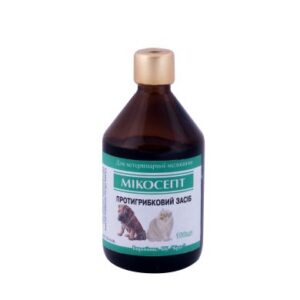
Mikos, 100 ml (clotrimazole, salicylic acid) Description Antifungal agent for external use. Ointment for external use three-phase, suspension-emulsion type, from almost
$117.70Original price was: $117.70.$99.00Current price is: $99.00.
Used as an aid to increase resistance to the effects of toxins and enhance immune responses, enhance fertility and vitality of young females, prevent rickets and osteomalacia. Canister 1 liter.
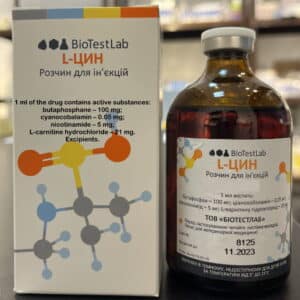
L-ching vitamin solution for injection, 10 ml (catosal analog)
Applications
The drug is used in camels, cattle, calves, pigs, pigs, sheep, lambs, goats, goats, dogs, cats, rabbits, fur animals, and poultry (chickens, laying hens, young hens, broilers) with metabolic disorders, vitamin deficiency, as a stimulant and a tonic to increase resistance body intoxication, diseases of different etiologies to improve growth and development in the treatment of the body with insufficient calcium and magnesium, childbirth, postpartum complications (postpartum paresis), during rehabilitation, after surgery, stress, to normalize the blood and liver function, with significant physical exertion.
Animals are a traditionally (since the time of Aristotle) distinguished category of organisms, currently considered as a biological Kingdom. Animals are the main object of Zoology study.
The animals are thought to have descended from flagellate unicellulars, and their closest known living relatives are choanoflagellates, collared flagellates morphologically similar to the choanocytes of some sponges. Molecular studies have determined the place of animals in the supergroup Opisthokonta, which also includes choanoflagellate, fungi, and a small number of parasitic protists. The name Opisthokonta refers to the posterior location of the flagellum in a mobile cell, as in most animal spermatozoa, while other eukaryotes tend to have an anterior flagellum.
It is believed that the first animals appeared in the middle of the Proterozoic. This is a creature called Grypania in the form of spiral carbon bands, whose prints are found in rocks aged 1.9—1.4 billion years in the vicinity of lake Superior. There is no doubt that the find belongs to animals. Some researchers consider it the remains of primitive multicellular algae-eukaryotes or a highly developed colony of cyanobacteria.
Another presumed ancient animal is called Horodyskia, found in 1.44 billion-year-old sediments in North America and 1.4-1.07 billion years in Australia.