Online Pet Vet Pharmacy: Best Deals Up to 40% Off + FREE Shipping on Orders $100+




























-15% 
Brovfom powder for Cats, Dogs, Fur animals and Pigeons 100g
Original price was: $30.80.$27.50Current price is: $27.50.

Kombit emulsion anthelmintics for Cattle, Sheep, Goats 50ml (3.38 oz)
Original price was: $30.68.$19.24Current price is: $19.24.
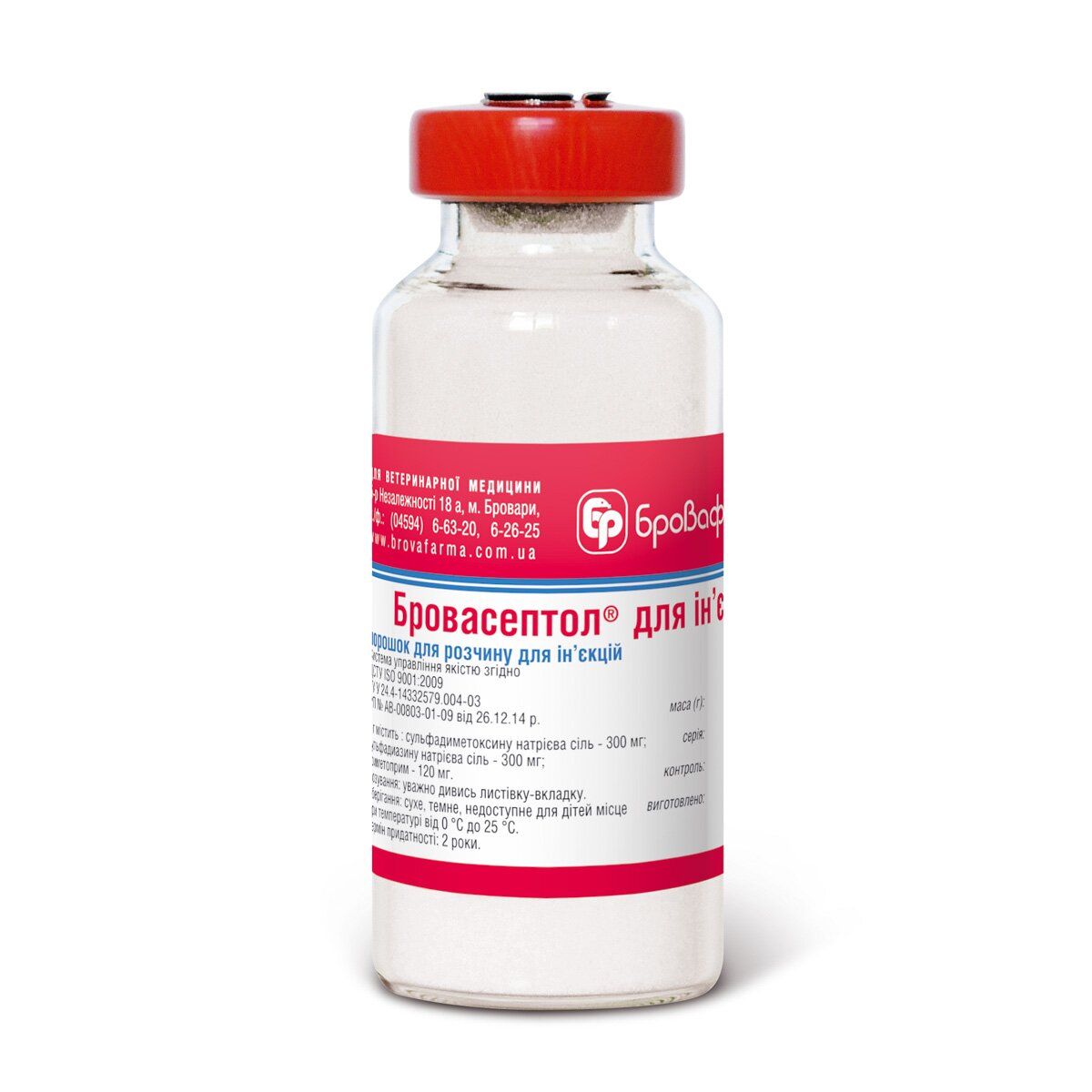
Brovseptol powder for *inj Cattle, Goat, Pig, Poultry 33g(6.6g*5pcs)
Original price was: $50.59.$42.78Current price is: $42.78.
| ACTIVE INGREDIENT | Sulfadiazine sodium, Sulfadimidine sodium, Trimethoprim |
|---|---|
| HEALTH CONDITION | Antibiotics |
| ANIMALS | Camels, Cats, Cattle, Dogs, Fur animals, Goat, Horses, Pigs, Rabbits, Sheep |
| BRAND | Brovafarma |
| FORM | Powder ❙ Granules |
| SIZE | 33g |
Customers Also Viewed
Original price was: $35.67.$28.93Current price is: $28.93.

Original price was: $35.67.$31.13Current price is: $31.13.
Original price was: $39.48.$35.53Current price is: $35.53.
Original price was: $121.14.$109.56Current price is: $109.56.
Description
Brovseptol (sulfadimidine sodium salt, sulfadiazine sodium, trimethoprim), 33g (6.6g*5pcs)
powder for solution for injection
The kit includes a vial (8 ml) – 0.9% isotonic sodium chloride solution.
Storage
1 g of the drug contains:
sulfadimidine sodium salt – 300 mg
sulfadiazine sodium salt – 300 mg
trimethoprim water-soluble 30% – 400 mg
Description
Light yellow powder, homogeneous, with a faint specific odor.
Pharmacological properties
Combined antibacterial drug with a broad spectrum of action.
Sulfadimidine and sulfadiazine are antimicrobial bacteriostatic agents from the group of sulfanilamides. Sulfadimidine has a short-term effect, sulfadiazine – a medium-term effect.
Both sulfanilamides are similar in their spectrum of properties and are active against gram-positive and gram-negative microorganisms – Bordetella spp., Corynebacterium spp., Haemophilus spp., Klebsiella spp., Pasteurella spp., Proteus spp., Salmonella spp., Stahycco sco.
The mechanisms of antimicrobial action of sulfadimidine and sulfadiazine are also similar and are due to impaired synthesis of folic acid in bacterial cells. Both sulfanilamides are similar in structure to para-aminobenzoic acid (PABA), so they are competitive inhibitors of dihydropteroate synthetase. This leads to disruption of the synthesis of tetrahydrofolic acid, which is necessary for bacteria to synthesize purines and pyrimidines.
Trimethoprim is an antibacterial agent, the chemical structure of which is a derivative of diaminopyrimidine. Acts bacteriostatically against gram-positive and gram-negative microorganisms – Actinomyces spp., Bacillus anthracis., Bordetella spp., Brucella spp., Cloceldium spp., Corynebacterium spp., Escherichia coli, Haemophilus spp., Klebsiella s., Klebsiella s. , Salmonella spp., Stahylococcus spp., Streptococcus spp., Sampylobacter spp. The mechanism of action is associated with the inhibition of the enzyme dihydrofolate reductase in the synthesis of tetrahydrofolic acid. This leads to a lack of folate, the main cofactor in the synthesis of nucleic acids, due to which bacteria disrupt the production of nucleic acids and protein.
The combination of two sulfanilamides and trimethoprim expands the antimicrobial spectrum of action of the drug and reduces the likelihood of the formation of resistant strains in pathogenic microflora. The mechanism of action of the drug is the sequential inhibition of enzymes involved in the synthesis of folic acid, which, in turn, inhibits the synthesis of thymidine by bacterial cells.
Sulfanilamides are rapidly adsorbed from the injection site and distributed throughout the animal’s body. Their therapeutic level is observed for 24 hours. About half is extracted by the kidneys unchanged by glomerular filtration, in the alkaline reaction of urine, their excretion is enhanced, a small amount is excreted in the bile. Compared with the concentration of sulfonamides in blood plasma, their level in the kidneys is higher, and in the skin, liver, lungs – lower.
Trimethoprim is rapidly absorbed from the injection site and is well distributed in animals. Its maximum concentration is observed 4 hours after drug administration. The half-life in plasma is 8-10 hours. During the first 24 hours, up to 60% is excreted by the kidneys, mainly by glomerular filtration and tubular secretion, with up to 90% of them unchanged, the rest – in the form of inactive metabolites. A small amount (4%) is excreted in the bile.
Indication
Treatment of animals for diseases caused by microorganisms sensitive to sulfadimidine, sulfadiazine and trimethoprim:
- cattle, sheep – septicemia, necrotic pododermatitis, abscesses, respiratory diseases (rhinitis, bronchitis, pneumonia), gastrointestinal tract (anaerobic dysentery of lambs, gastroenteritis), genitourinary system (vaginitis, urethritis, metritis, mastitis);
- pigs – enzootic pneumonia, bacterial agalactia (sows), dysentery, edema, erysipelas, salmonellosis, pasteurellosis;
- horses – diarrhea (foal), contagious metritis, duty, sputum;
- rabbits – gastroenteritis, colibacillosis, pasteurellosis, coccidiosis, pneumonia, infectious rhinitis.
Contraindication
Do not prescribe to animals with hypersensitivity to the active substances of the drug, impaired liver and kidney function, lactating animals and females in the last third of pregnancy.
Do not use simultaneously with paraaminobenzoic acid derivatives.
Storage conditions
In a dry, dark place, out of reach of children at a temperature of 0 to +25 ° C.
After opening the vial, store the drug in the refrigerator and use within 6 days.
Expiration date
2 years
Method of application and dosage
Before use, the drug is combined with sodium chloride 0.9% solution included in the kit. To 3.3 g of the drug add 8 ml of sodium chloride, to 6.6 g of the drug – 16 ml and administered intramuscularly in the following doses:
- cattle, sheep, horses, pigs – 0.6-0.8 ml per 10 kg of body weight;
- rabbits – 0.1-0.15 ml per 1 kg of body weight.
The injection is repeated 2-4 times in 24 hours. The optimal course of treatment is 5 days. If the clinical symptoms of the disease have not disappeared completely, the course is extended for 2 days.
Injections larger than the following values are divided into several parts and injected in different places:
- small animals, young animals – 10 ml;
- large and adult animals – 20 ml.
For cattle with bacterial diseases of the uterus, udder and hooves of the pelvic extremities, slow intra-arterial administration is allowed.
*Kilograms to a Pounds conversion table
| Kilograms (kg) | Pounds (lb) | Pounds+Ounces (lb+oz) |
| 0.1 kg | 0.220 lb | 0 lb 3.527 oz |
| 1 kg | 2.205 lb | 2 lb 3.274 oz |
| 5 kg | 11.023 lb | 11 lb 0.370 oz |
| 10 kg | 22.046 lb | 22 lb 0.740 oz |
Reservation
Do not use a solution of novocaine to dilute the drug.
With long-term use of the drug may be allergic reactions (skin rash, urticaria), itching, crystalluria, blood disorders (leukopenia, agranulocytosis, thrombocytopenia).
Goats are hypersensitive to sulfonamides, so they should be administered with extreme caution.
Salicylates and phenylbutazone may interfere with the binding of sulfonamides to plasma proteins and increase the toxicity of sulfonamides. Derivatives of paraaminobenzoic acid (novocaine, tetracaine, procainamide hydrochloride) reduce the antimicrobial activity of sulfonamides.
After the last application of the drug slaughter of animals and poultry for meat is allowed in 10 days. People can eat milk in 4 days. Meat and milk obtained earlier than this period are disposed of or fed to non-productive animals, depending on the conclusion of the veterinarian.
Delivery
We offer FREE SHIPPING WORLDWIDE for all products.
Questions & Answers
Questions and answers of the customers
You may also like…
-12% 
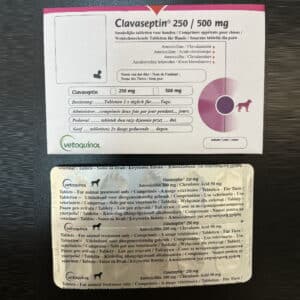
62.5mg (10 tablets)
250mg (10 tablets)
-14%
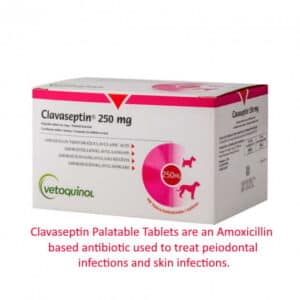
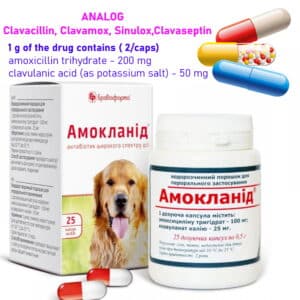
AMOK-CAPS for dogs, cats – 25 capsules
AMOK-CAPS (amoxicillin trihydrate - 200 mg, clavulanic acid (as potassium salt) - 50 mg)
Amoxicillin trihydrate - semi-synthetic penicillin, belongs to beta-lactam antibiotics, inhibits the synthesis of bacterial cell walls by inhibiting transpeptidase and carboxypeptidase, which causes a violation of osmotic pressure and the death of microorganisms in the developmental stage.
Potassium clavulanate is a beta-lactam structurally related to penicillins, has little antibacterial activity, but, irreversibly inhibiting a size of beta-lactamases, prevents inactivation of amoxicillin and provides its antibiotic activity against bacteria, usually resistant to other amoxicillin-resistant amoxicillin.
100g (0.22lb)
500g (1.1lb)
-34%
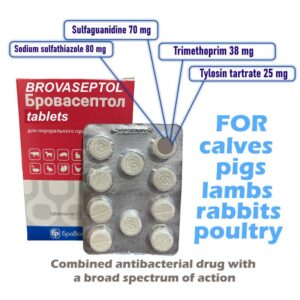
BROVSEPTOL for Calves, Lambs, Pigs, Rabbits, Poultry 100 Tablets
BROVSEPTOL sodium sulfathiazole, sulfaguanidine, trimethoprim, tylosin tartrate, 100 tablets Arthritis; Dysentery; Colibacteriosis; Mycoplasmosis; Edema disease; Pasteurellosis; Pneumonia; Rhinitis; Erysipelas; Salmonellosis; Typhus; Cholera; Enteritis Composition 1 g of the drug (1 tablet) contains:
Related products

-6% 
TYCLOSIN 500 mg/g Soluble Powder for dogs, chickens and pigs (100g/0.22lbs)
Tylosin (Tylan powder) 500 mg for chickens ● poultry ● pigs ● dogs
Tylosin is an antibiotic typically used to treat bacterial infections in farm animals, but veterinarians often use it to treat certain types of chronic diarrhea in cats and dogs. The powder form is not FDA approved for use in companion animals, but it is common practice for veterinarians to prescribe this medication. The drug is also given as an injectable type.
It is prescribed for the prevention and treatment of respiratory mycoplasmosis of birds, infectious sinusitis of turkeys, as well as the treatment of dysentery and gastroenterocolitis of bacterial etiology of pigs, bronchopneumonia of calves caused by pathogens sensitive to tylosin. To combat necrobacteriosis in cattle and small ruminants.
-12% 
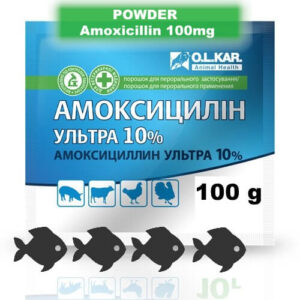
Amox 10% powder useful to control of some common bacterial fish and animals 100g
Amoxicillin Ultra 10% Powder
Treatment of calves (under 3 months), pigs and poultry (chickens, broilers, replacement chicks birds) in diseases of the digestive tract, respiratory and urinary tract, skin and soft tissue caused by microorganisms sensitive to amoxicillin.
Dosage Oral doses of calves up to 3 months and pigs -1-2 g product per 10 kg of body weight per day up or 7-15 g product per 10 liters of drinking water per day up within 5-7 days; poultry (chicken, chickens, young birds repair) – 0.5 – 1 g drug per 10 kg of body weight per day up or 5-10 g product per 10 liters of drinking water per day up within 5-7 days. Renew the water with the drug should be every 24 hours.

-6%
TYCLOSIN 500 mg/g Soluble Powder for dogs, chickens and pigs (100g/0.22lbs)
Tylosin (Tylan powder) 500 mg for chickens ● poultry ● pigs ● dogs
Tylosin is an antibiotic typically used to treat bacterial infections in farm animals, but veterinarians often use it to treat certain types of chronic diarrhea in cats and dogs. The powder form is not FDA approved for use in companion animals, but it is common practice for veterinarians to prescribe this medication. The drug is also given as an injectable type.
It is prescribed for the prevention and treatment of respiratory mycoplasmosis of birds, infectious sinusitis of turkeys, as well as the treatment of dysentery and gastroenterocolitis of bacterial etiology of pigs, bronchopneumonia of calves caused by pathogens sensitive to tylosin. To combat necrobacteriosis in cattle and small ruminants.
-10%
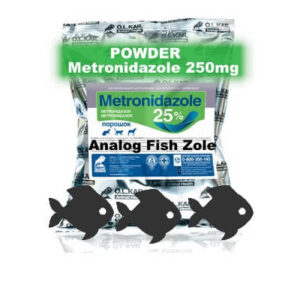
Metron powder for ornamental, aquarium fish and farm animals 500g (1.1 lbs)
Metronidazole 25% Powder (Metro Zole)
Exerts a bactericidal action on gram-positive and some gram-negative bacteria. It has a good effect against a size of pathogenic bacteria associated with ornamental fish diseases. In other words, diseases including Aeromonas and pseudomonas genera and mycobacterial group (gill diseases, Rhodococcus). It is useful in the control of “Hole-in-the-Head” and “Angel Problems” in Cichlid and Discus.
Treatment of cattle, sheep, pigs, fur-bearing animals, dogs, cats and birds suffering from trichomoniasis, dysentery, diarrhea, colitis, stomatitis, as well as diseases of the respiratory system, genitourinary system, gastrointestinal tract and skin caused by microorganisms sensitive to metronidazole. Dosage Orally with food in a dose of 10-20 mg of metronidazole per 1 kg m.t. for the active substance - twice a day for 5-7 days. If necessary, treatment is repeated after 7-8 days.
-7%
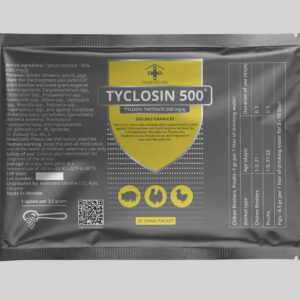
TYCLOSIN 500 powder (50g) for Broiler chickens, Poultry, Pig, Dog
Tyclosin (Tylan Tylosin powder) 50% for dogs✔ for chickens✔ for cats✔
Tylosin is an antibiotic typically used to treat bacterial infections in farm animals, but veterinarians often use it to treat certain types of chronic diarrhea in cats and dogs. The powder form is not FDA approved for use in companion animals, but it is common practice for veterinarians to prescribe this medication. The drug is also given as an injectable type.
Tylosin – the drug of a wide spectrum bacteriostatic action.
Active ingredient tylosin tartrate 500 mg is a mixture of macrolide antibiotics produced by a strain of Streptomyces fradiae, comprising mainly tylosin A.
For: Chickens, Turkeys, Swine, Honey Bees, and occasionally can be prescribed to dogs and cats

-12%
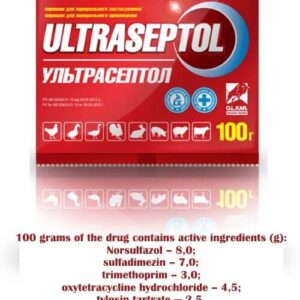
Ultrasept powder for Cattle, Pigs, Sheeps, Poultry 100 g
Ultrasept powder (sulfadimine, oxytetracycline, trimethoprim, tylosin, norsulfazole)
For the prevention and treatment of animals and poultry with primary and secondary bacterial infections of the respiratory, digestive and urinary tracts that is: the upper respiratory tract catarrh, pneumonia, enteritis, cystitis, mastitis, septicemia, postnatal complications, and a size of specific infections:
– Calves – Salmonella gastroenteritis kolibatselyarny, pasteurellosis, vibriosis;
– Pigs – enzootic pneumonia, arthritis, dysentery, edematous disease erysipelas, salmonellosis, pasteurellosis;
– Sheep – septicemia, eymerioz, contagious agalactia;
– Poultry – typhoid, cholera, salmonellosis, mycoplasmosis, rhinitis.
-7%

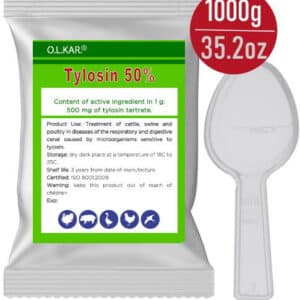
Phormasin / Tyclosin Powder for Dogs (1 KG) (Broiler chickens, Poultry, Pig)
Phormasin 50% (Tylan Tylosin powder) for dogs✔ for chickens✔ for cats✔
Tylosin (Tylan powder) 500mg for dogs✔ for chickens✔ for cats✔
Tylosin is an antibiotic typically used to treat bacterial infections in farm animals, but veterinarians often use it to treat certain types of chronic diarrhea in cats and dogs. The powder form is not FDA approved for use in companion animals, but it is common practice for veterinarians to prescribe this medication. The drug is also given as an injectable type.
For: Chickens, Turkeys, Swine, Honey Bees, and occasionally can be prescribed to dogs and cats