Online Pet Vet Pharmacy: Best Deals Up to 40% Off + FREE Shipping on Orders $100+






























-20% New AmoxicillinClavulanic acid


Nivom Injectable Solution for Dogs and Cats 20ml (CERENIA analog)
Original price was: $214.50.$164.98Current price is: $164.98.
Cardiostimul 2.5 mg Tablets for Dogs 100 tab
Original price was: $76.88.$65.67Current price is: $65.67.
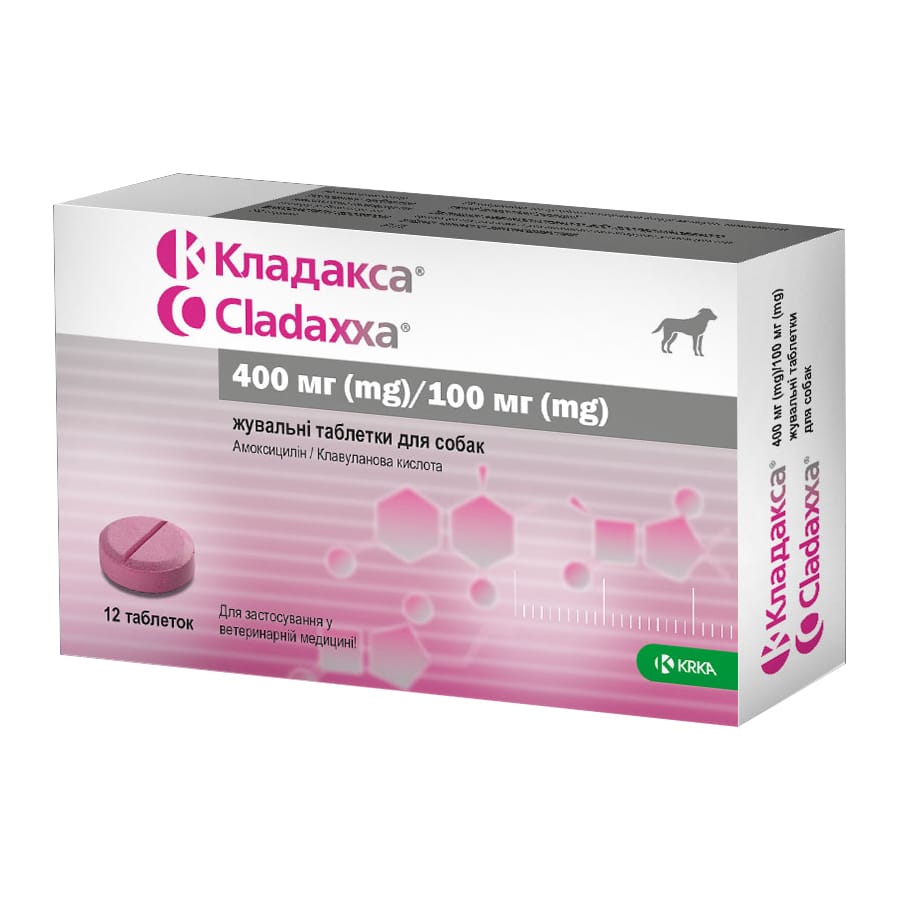
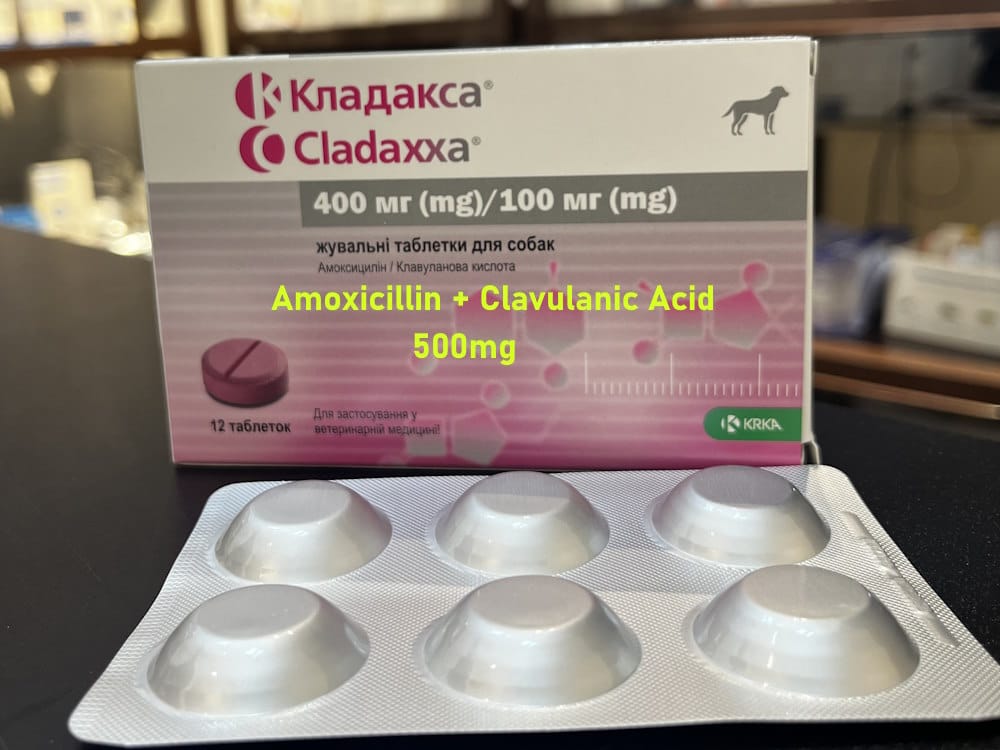
Cladaxxa 500 mg for dogs and cats 12 tablets
Original price was: $43.99.$35.19Current price is: $35.19.
| ACTIVE INGREDIENT | Amoxicillin, Clavulanic acid |
|---|---|
| HEALTH CONDITION | Antibiotics |
| ANIMALS | Cats, Dogs |
| BRAND | KRKA |
| FORM | Tablets |
| SIZE | 12 tablets |
| NEW | yes |
Customers Also Viewed
Original price was: $140.58.$108.68Current price is: $108.68.
Original price was: $249.58.$230.88Current price is: $230.88.
Original price was: $35.67.$28.93Current price is: $28.93.
Original price was: $249.58.$230.88Current price is: $230.88.

Original price was: $39.59.$33.98Current price is: $33.98.
Description
Cladaxxa 500 mg (amoxicillin + Clavulanic Acid) (Analog Clavacillin, Clavamox, Clavaseptin, Betacillin, Sinulox, Synulox), 12 tablets
Description
The tablets are pink, spotted, round in shape with a fracture line on one side.
The tablet can be divided into halves.
Storage
1 tablet (1750 mg) contains active substances:
- amoxicillin (in the form of amoxicillin trihydrate) – 400 mg,
- clavulanic acid (in the form of diluted sodium clavulanate) – 100 mg.
Excipients: microcrystalline cellulose, magnesium stearate, silicon colloidal anhydrous, sodium starch glycolate (type A), dried autolyzed yeast, erythrosine (E127).
Pharmacological properties
ATS vet classification code QJ01 – antibacterial veterinary drugs for systemic use. QJ01CR02 – Amoxicillin and enzyme inhibitor.
Amoxicillin is a semi-synthetic aminopenicillin (ß-lactam antibiotic) with a broad spectrum of antimicrobial activity. The mechanism of action consists in disrupting the synthesis of the bacterial cell wall, which leads to the lysis of the bacterial cell, namely, when ß-lactam antibiotics freely pass through the peptidoglycan layer in gram-positive bacteria and the hydrophobic barrier in gram-negative bacteria to the cytoplasmic membrane.
Clavulanic acid inactivates the ß-lactamase of the bacterial cell and, thereby, restores the sensitivity of the bacterium to the bactericidal action of amoxicillin in concentrations that are easily reached in animal tissues after the introduction of the drug.
The combination of amoxicillin/clavulanic acid has a wide spectrum of bactericidal action against gram-positive (Staphylococcus spp., Clostridium spp., Corynebacterium spp., Peptostreptococcus spp., Streptococcus spp.) and gram-negative (Escherichia coli, Salmonella spp., Klebsiella spp., Pasteurella spp.) ) of bacteria, including ß-lactamase-producing strains of microorganisms.
The level of antimicrobial sensitivity of certain pathogenic microorganisms that cause diseases of the respiratory organs, urinary tract and skin, determined in European studies, was as follows:
Respiratory infections (data collected in 2019)
| Pathogen | MIC 50 (μg/ml) | MIC 90 (μg/ml) | Resistance (%) |
| Staphylococcus pseudointermedius | 0.12 | 0.12 | |
| Streptococcus sp. | <0.015 | 0.06 | |
| Staphylococcus aureus | 0.5 | 1 | |
| Escherichia coli (dogs)* | 4 | 8 | 0 |
Diseases of the urinary tract (data collected in 2017 and 2019)
| Pathogen | MIC 50 (μg/ml) | MIC 90 (μg/ml) | Resistance (%) |
| Staphylococcus intermedius | 0.12 | 0.25 | 3 |
| Streptococcus canis | 0.12 | 0.12 | 0 |
| Escherichia coli | 4 | 8 | 26 |
Skin disease (registered in 2016)
| Pathogen | MIC 50 (μg/ml) | MIC 90 (μg/ml) | Resistance (%) |
| Staphylococcus pseudointermedius | 0.12 | 0.12 | 4.7 |
| Staphylococcus aureus | 0.25 | 1 | 26.7 |
| mecA-positive staphylococci | 16 | 32 | 82.0 |
| Streptococcus spp. | 0.12 | 0.12 | / |
| Escherichia coli | 4 | 8 | 99.1 |
| Pasteurelia spp. | 0.25 | 0.25 | / |
The Clinical and Laboratory Standards Institute (CLSI) has established amoxicillin/clavulanate MICs for staphylococci and streptococci causing skin and soft tissue infections and urinary tract infections in cats and dogs (CLSI document VET01S, 5th edition, 2020) as follows as follows: <0.25/0.12 μg/ml — the microorganism is sensitive; >1/0.5 μg/ml — resistant. The MIC of amoxicillin/clavulanate for susceptible strains of E. coli causing skin and soft tissue infections in cats and dogs is <0.25/0.12 μg/ml and for urinary tract infections <8/4 µg/ml
Amoxicillin is well absorbed after oral administration. Bioavailability in dogs is 60-70%. Amoxicillin has a relatively small volume of distribution, a low level of binding to plasma proteins (34% in dogs) and a short half-life by active tubular excretion through the kidneys. After absorption, its highest concentrations are found in the kidneys (urine) and bile, and then in the liver, lungs, heart and spleen. The distribution of amoxicillin in the cerebrospinal fluid is low, unless the meninges are inflamed.
After oral administration of amoxicillin to dogs, the maximum concentration in plasma C max (7.31 μg/ml) is reached after approximately 1.37 hours. The average half-life of amoxicillin was 1.21 hours.
Clavulanic acid is well absorbed after oral administration. It does not penetrate well into the cerebrospinal fluid. Binding to blood plasma proteins is approximately 25%, and the half-life is short. Clavulanic acid is mainly excreted unchanged in the urine.
After oral administration of the drug to dogs, the average value of Cmax of clavulanic acid (1.33 μg/ml) is reached in approximately 1.02 hours. The average half-life of clavulanic acid is 0.83 hours.
Application
Treatment of dogs for diseases of the skin (including treatment of deep and superficial pyoderma), soft tissues (abscesses and anal saculitis), oral cavity (for example, gingivitis), urinary tract, respiratory organs (diseases of the upper and lower respiratory tract), digestive tract (enteritis) caused by microorganisms sensitive to amoxicillin and clavulanic cyst.
Dosage
Orally at a dose of 10 mg of amoxicillin and 2.5 mg of clavulanic acid per 1 kg of body weight, i.e. 12.5 mg of combined active substances per 1 kg of body weight, twice a day (corresponding to 25 mg of combined active substances per 1 kg per day) or:
| Body weight of the animal (kg) | Dosage (number of tablets to be taken twice a day) |
| <30.0 | It is necessary to use tablets with a dosage of 40 mg/10 mg or 200 mg/50 mg |
| 30.1-40.0 | 1 |
| 40.1-60.0 | 1 1/2 |
| 60.1-80.0 | 2 |
To ensure the correct dosage, body weight should be determined as accurately as possible to avoid underdosing.
If the animal does not accept the tablet from the hand or bowl, then the tablets can be crushed and added to a small amount of feed, and then fed immediately.
In most cases, the course of treatment is 5-7 days. Chronic diseases may require longer treatment at the discretion of the veterinarian.
*Kilograms to a Pounds conversion table
| Kilograms (kg) | Pounds (lb) | Pounds+Ounces (lb+oz) |
| 0.1 kg | 0.220 lb | 0 lb 3.527 oz |
| 1 kg | 2.205 lb | 2 lb 3.274 oz |
| 5 kg | 11.023 lb | 11 lb 0.370 oz |
| 10 kg | 22.046 lb | 22 lb 0.740 oz |
Contraindication
Hypersensitivity to penicillins and other ß-lactams, to any excipients.
Do not use the drug for horses, rabbits, ants, hamsters, chinchillas and small herbivores.
Do not use in animals with severe renal impairment accompanied by anuria and oliguria.
Do not use simultaneously with chloramphenicol, antibiotics of the group of cephalosporins, tetracyclines, macrolides.
Do not use in case of known resistance to the combination of amoxicillin/clavulanic acid.
Side effect
Very rarely, treated animals may develop hypersensitivity reactions to penicillins; in such cases, the use of the drug should be stopped and symptomatic treatment prescribed.
Very rarely, disorders of the digestive tract (diarrhea, vomiting) may occur after taking the drug. Treatment may be discontinued depending on the severity of side effects and the benefit/risk assessment by the veterinarian.
Special precautions for use
In animals with impaired liver and kidney function, the drug should be used only after a risk assessment by a veterinarian, and the dosage should be carefully considered. The use of the drug should be based on a test for the sensitivity of disease-causing microorganisms to the combination of amoxicillin/clavulanic acid.
Use of the drug outside of the SPC may increase the prevalence of bacteria resistant to amoxicillin/clavulanic acid and may reduce the effectiveness of treatment with other beta-lactam antibiotics due to possible cross-resistance.
Official and local policy regarding antibiotic therapy should be taken into account when using this drug. There are data on the growth of antibiotic resistance of E. coli, including polyresistance.
Do not use in case of detection of bacteria sensitive to penicillins of a narrow spectrum of action or separately to amoxicillin.
Chewable tablets are flavored. In order to prevent any accidental ingestion of tablets, it is necessary to keep them in a place inaccessible to animals.
Use during pregnancy, lactation, pregnancy
Laboratory studies in rats and mice have shown no evidence of teratogenic, fetotoxic or maternotoxic effects.
The safety of the drug has not been evaluated in pregnant and lactating females.
It is recommended to use the drug in animals during pregnancy and lactation only when the benefit of the drug outweighs the possible risks, according to the decision of a veterinary medicine doctor.
Interaction with other means or other forms of interaction
There is a possibility for allergic cross-reactivity with other penicillins.
Penicillins can increase the antibacterial activity of aminoglycosides.
Special precautions for persons and service personnel
Penicillins and cephalosporins can cause hypersensitivity (allergy) after injection, inhalation, consumption, or skin contact. Hypersensitivity to penicillins can lead to cross-reactions with cephalosporins and vice versa. Allergic reactions to these substances can be serious.
If you know about hypersensitivity to amoxicillin, you should not work with such drugs. The drug should be used with caution. If there was contact with the drug and symptoms of allergy (redness of the skin) appeared, you should consult a doctor. Itching of the face, eyes or lips, difficulty breathing are more serious symptoms and require immediate medical attention. After working with the drug, it is necessary to wash hands.
Release form
Laminated aluminum blisters of 6 tablets, in cardboard boxes of 12, 60 or 300 tablets.
Storage
Dry, dark place inaccessible to children at temperatures from 0 °C to 25 °C.
Expiration date
2 years.
The unused half of the tablet must be returned to the blister and used within 24 hours.
For use in veterinary medicine!
Delivery
We offer FREE SHIPPING WORLDWIDE for all products.
Questions & Answers
Questions and answers of the customers
You may also like…
-12% AmoxicillinClavulanic acid
62.5mg (10 tablets)
250mg (10 tablets)
-14% AmoxicillinClavulanic acid
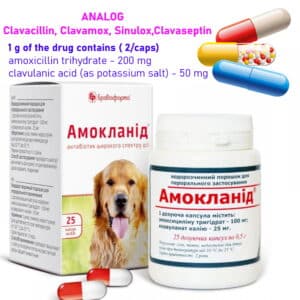
AMOK-CAPS for dogs, cats – 25 capsules
AMOK-CAPS (amoxicillin trihydrate - 200 mg, clavulanic acid (as potassium salt) - 50 mg)
Amoxicillin trihydrate - semi-synthetic penicillin, belongs to beta-lactam antibiotics, inhibits the synthesis of bacterial cell walls by inhibiting transpeptidase and carboxypeptidase, which causes a violation of osmotic pressure and the death of microorganisms in the developmental stage.
Potassium clavulanate is a beta-lactam structurally related to penicillins, has little antibacterial activity, but, irreversibly inhibiting a size of beta-lactamases, prevents inactivation of amoxicillin and provides its antibiotic activity against bacteria, usually resistant to other amoxicillin-resistant amoxicillin.

-9% FirocoxibAnti-inflammatoryArthritis Pain & Inflammation

Chewable Tablets for Dogs – 30tab
Boehringer Ingelheim Previcox for the treatment of osteoarthritis in dogs, 227 mg
Previcox is a highly selective non-steroidal anti-inflammatory drug for dogs with the unique active ingredient firocoxib in tablet form. The most selective inhibitor of COX-2, which provides excellent results. Safe for long-term use. Fast-acting, within 15 minutes after the first dose. Powerful pain relief 24 hours a day without "failure" in pain relief. A steady increase in the degree of improvement of parameters during long-term treatment. Leads to an improvement noticeable to dog owners. A higher level of improvement compared with NSAIDs with a predominant anti-inflammatory effect. Provides global control of osteoarthritis with the maximum degree of satisfaction of veterinarians and dog owners.

-8% New CarprofenAnti-inflammatoryArthritis Pain & Inflammation
Related products

-6% Tylosin
TYCLOSIN 500 mg/g Soluble Powder for dogs, chickens and pigs (100g/0.22lbs)
Tylosin (Tylan powder) 500 mg for chickens ● poultry ● pigs ● dogs
Tylosin is an antibiotic typically used to treat bacterial infections in farm animals, but veterinarians often use it to treat certain types of chronic diarrhea in cats and dogs. The powder form is not FDA approved for use in companion animals, but it is common practice for veterinarians to prescribe this medication. The drug is also given as an injectable type.
It is prescribed for the prevention and treatment of respiratory mycoplasmosis of birds, infectious sinusitis of turkeys, as well as the treatment of dysentery and gastroenterocolitis of bacterial etiology of pigs, bronchopneumonia of calves caused by pathogens sensitive to tylosin. To combat necrobacteriosis in cattle and small ruminants.
-14% Enrofloxacin

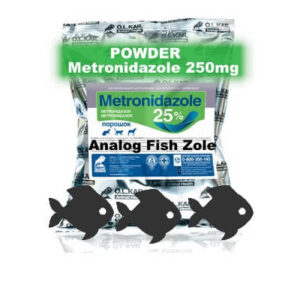
-14% MetronidazoleAntiprotozoal
Antiprotozoal Metron powder for ornamental, aquarium fish and farm animals 100g (0.22 lbs)
Metronidazole 25% Powder (Metro Zole)
Exerts a bactericidal action on gram-positive and some gram-negative bacteria. It has a good effect against a size of pathogenic bacteria associated with ornamental fish diseases. In other words, diseases including Aeromonas and pseudomonas genera and mycobacterial group (gill diseases, Rhodococcus). It is useful in the control of “Hole-in-the-Head” and “Angel Problems” in Cichlid and Discus.
Treatment of cattle, sheep, pigs, fur-bearing animals, dogs, cats and birds suffering from trichomoniasis, dysentery, diarrhea, colitis, stomatitis, as well as diseases of the respiratory system, genitourinary system, gastrointestinal tract and skin caused by microorganisms sensitive to metronidazole.
-23% DoxycyclineTylosinVitamin B1Vitamin B12Vitamin B6Vitamin B9Vitamin D3Vitamin K3Vitamin АVitamin ЕVitamins B
Tiloxon For Broiler chickens, Poultry, Cattle (1000g)
Doxycycline hydrochloride, tylosin tartrate, vitamins
For the treatment of mixed infections in young cattle, pigs and poultry, such as diseases of the gastrointestinal tract, respiratory tract, genitourinary system, skin, mastitis, metritis, agalactia.
The drug improves the growth and development of a young organism, reduces the likelihood of stress.
The drug is administered orally in a mixture with water or feed in the following doses:
poultry – at the rate of 1-1.5 g of preparation per 1 liter of drinking water;
young cattle – 1-1.5 g per 10 kg of body weight
pigs – 1-2 g per 10 kg of body weight.
For treatment, the drug is given twice a day for 3-5 days until the recovery or improvement of the general condition. With the preventive purpose – once a day for 3-5 days.
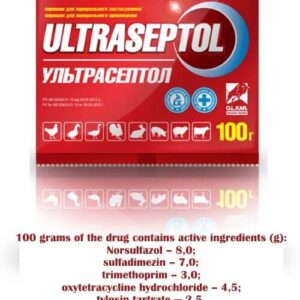
-16% NorsulfazoleOxytetracyclineSulfadimidineTrimethoprimTylosin
Ultrasept powder for Cattle, Pigs, Sheeps, Poultry 500 g
Ultrasept powder (sulfadimine, oxytetracycline, trimethoprim, tylosin, norsulfazole)
For the prevention and treatment of animals and poultry with primary and secondary bacterial infections of the respiratory, digestive and urinary tracts that is: the upper respiratory tract catarrh, pneumonia, enteritis, cystitis, mastitis, septicemia, postnatal complications, and a size of specific infections:
– Calves – Salmonella gastroenteritis kolibatselyarny, pasteurellosis, vibriosis;
– Pigs – enzootic pneumonia, arthritis, dysentery, edematous disease erysipelas, salmonellosis, pasteurellosis;
– Sheep – septicemia, eymerioz, contagious agalactia;
– Poultry – typhoid, cholera, salmonellosis, mycoplasmosis, rhinitis.
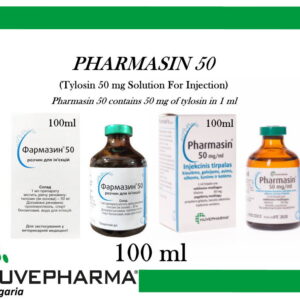
-10% New Tylosin

-7% Tylosin
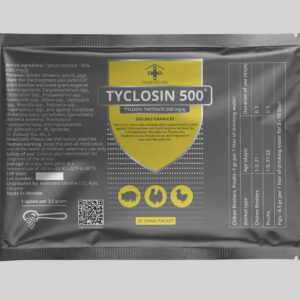
TYCLOSIN 500 powder (50g) for Broiler chickens, Poultry, Pig, Dog
Tyclosin (Tylan Tylosin powder) 50% for dogs✔ for chickens✔ for cats✔
Tylosin is an antibiotic typically used to treat bacterial infections in farm animals, but veterinarians often use it to treat certain types of chronic diarrhea in cats and dogs. The powder form is not FDA approved for use in companion animals, but it is common practice for veterinarians to prescribe this medication. The drug is also given as an injectable type.
Tylosin – the drug of a wide spectrum bacteriostatic action.
Active ingredient tylosin tartrate 500 mg is a mixture of macrolide antibiotics produced by a strain of Streptomyces fradiae, comprising mainly tylosin A.
For: Chickens, Turkeys, Swine, Honey Bees, and occasionally can be prescribed to dogs and cats
-5% Tylosin
TYCLOSIN 500mg / 50% powder for poultry, chickens and pigs (500g)
Tylosin (Tylan powder) 500mg for dogs✔ for chickens✔ for cats✔
Tylosin is an antibiotic typically used to treat bacterial infections in farm animals, but veterinarians often use it to treat certain types of chronic diarrhea in cats and dogs. The powder form is not FDA approved for use in companion animals, but it is common practice for veterinarians to prescribe this medication. The drug is also given as an injectable type.
Tylosin – the drug of a wide spectrum bacteriostatic action.
Active ingredient tylosin tartrate 500 mg is a mixture of macrolide antibiotics produced by a strain of Streptomyces fradiae, comprising mainly tylosin A.
For: Chickens, Turkeys, Swine, Honey Bees, and occasionally can be prescribed to dogs and cats