Online Pet Vet Pharmacy: Best Deals Up to 40% Off + FREE Shipping on Orders $100+
































-8% New Marbofloxacin



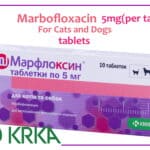
Marfox 5mg for Dogs and Cats 10 tablets
Original price was: $39.59.$36.18Current price is: $36.18.

Marfox 80mg for Dogs 12 tablets
Original price was: $65.99.$62.58Current price is: $62.58.
Marfox 20mg for Dogs 10 tablets
Original price was: $45.09.$41.68Current price is: $41.68.
| ACTIVE INGREDIENT | Marbofloxacin |
|---|---|
| HEALTH CONDITION | Antibiotics |
| ANIMALS | Dogs |
| BRAND | KRKA |
| FORM | Tablets |
| SIZE | 10 tablets |
Customers Also Viewed
Original price was: $31.89.$29.58Current price is: $29.58.
Original price was: $39.48.$32.99Current price is: $32.99.
Original price was: $140.58.$108.68Current price is: $108.68.
Original price was: $35.67.$28.93Current price is: $28.93.
Original price was: $25.29.$21.88Current price is: $21.88.
Description
Marbofloxacin – 20 mg (Marbocyl / Zeniquin / Marboquin analog)
Description
Light brownish-yellow, marbled, round, biconvex with beveled edges and a notch for division on one side, white and dark blotches are possible.
The tablets can be divided into equal halves.
Composition
1 tablet (280 mg) contains the active ingredients:
marbofloxacin – 20 mg.
Excipients: lactose, povidone K 90, dry yeast, meat flavoring, crospovidone, hydrogenated castor oil, colloidal silicon dioxide, magnesium stearate.
Pharmacological properties
ATC vet classification code QJ01 – antibacterial veterinary drugs for systemic use. QJ01MA93 – Marbofloxacin.
Marbofloxacin is a synthetic, bactericidal antimicrobial substance that belongs to the group of fluoroquinolones. The action of marbofloxacin is based on the suppression of DNA gyrase and topoisomerase IV. It is effective against a wide range of gram-positive bacteria (in particular streptococcus and staphylococcus) and gram-negative bacteria (Escherichia coli, Citrobacter freundii, Proteus spp., Klebsiella spp., Shigella spp., Pasteurella spp., Pseudomonas spp.), As well as Mycoplasma spp. …
Detailed literature on the susceptibility of microorganisms, derived from two conducted European field studies, during which hundreds of pathogens susceptible to marbofloxacin for cats and dogs were examined, were published in 2009.
| Microorganism names | MIC (μg / ml) |
| Staphylococcus intermedius | 0.23-0.25 |
| Escherichia coli | 0.125-0.25 |
| Pasteurella multocida | 0.04 |
| Pseudomonas aeruginosa | 0.94 |
Cut-off values were determined to be ≤1 μg / ml for susceptible organisms, 2 μg / ml for moderately sensitive organisms and ≥4 μg / ml for resistant organisms.
Marbofloxacin is not active against anaerobes, fungi, or yeast. Resistance has been observed among streptococcal strains. Resistance to fluoroquinolones develops as a result of chromosomal mutations, taking into account three mechanisms: a decrease in the permeability of the bacterial wall, the expression of an efflux pump, or a mutation of enzymes responsible for binding molecules.
After oral administration to dogs and cats at the recommended dose of 2 mg / kg, marbofloxacin is rapidly absorbed and reaches a maximum plasma concentration of 1.5 μg / ml within 2 hours.
Bioavailability is close to 100%.
Marbofloxacin weakly binds to plasma proteins (less than 10%), is well distributed throughout the body and in most tissues (liver, kidneys, skin, lungs, bladder, uterus, gastrointestinal tract), it reaches a higher concentration than in plasma. Marbofloxacin is excreted slowly (t½ß = 14 hours in dogs and 10 hours in cats), mainly in active form in urine (2/3) and feces (1/3).
Application
Treatment of dogs with diseases of the urinary tract and respiratory organs, skin and soft tissues (pyoderma of skin folds, impetigo, folliculitis, furunculosis, cellulitis) caused by microorganisms sensitive to marbofloxacin.
Dosage
Orally. The recommended dose is 2 mg of marbofloxacin per 1 kg of body weight per day (1 tablet per 10 kg of animal body weight per day). If necessary, only in dogs, the use of a combination of whole or half tablets of different dosages (5 mg, 20 mg or 80 mg) will provide an accurate dosage, namely:
| Animal body weight (kg) | Number of tablets (dose 20 mg + 5 mg) | Recommended dose of marfloxacin (mg / kg) |
| 4 – 6 | 0.5 + 0.5 | 2.1 – 3.1 |
| >6 – 9 | 1 | 2.0 – 3.3 |
| >9 – 11 | 1 + 1 | 2.3 – 2.8 |
| >11 – 15 | 1.5 | 2.0 – 2.7 |
| >15 – 20 | 2 | 2.0 – 2.7 |
| >20 – 25 | 2.5 | 2.0 – 2.5 |
| >25 – 30 | 3 | 2.0 – 2.4 |
| >30 – 35 | 3.5 | 2.0 – 2.3 |
To correctly determine the dose, it is necessary to accurately determine the bodyweight of the animal (as far as possible) in order to avoid an insufficient dose.
The course of treatment for dogs is:
- in the treatment of diseases of the skin and soft tissues – at least 5 days or maximum 40 days, depending on the course of the disease;
- in the treatment of diseases of the urinary tract organs – 10-28 days, depending on the course of the disease;
- in the treatment of respiratory diseases – 7-21 days, depending on the course of the disease.
Contraindications
Do not administer to animals with hypersensitivity to marbofloxacin or other fluoroquinolones or to an auxiliary substance of the drug.
Do not apply to small and medium-sized dogs in the first 12 months of life, large breeds (Danish Great Dane, Briard, Bernese Shepherd Dog, Bouvier and English Mastiff) – in the first 18 months.
Do not use in cats. For the treatment of these animals, 5 mg tablets are used.
Warning
Special precautions for use
High doses of some fluoroquinolones may have epileptogenic potential. Should be used with caution in dogs and cats with epilepsy. However, no serious side effects are expected when the drug is used in dogs and cats at the recommended therapeutic dose. In particular, no joint lesions were found in clinical studies using the recommended dose.
When using the drug, generally accepted principles for the use of antimicrobial drugs should be taken into account. Fluoroquinolones are prescribed to treat clinical conditions that are difficult to treat, or conditions that may not respond well to other classes of antimicrobial drugs.
Whenever possible, fluoroquinolones should only be used in conjunction with a susceptibility test.
The use of the drug in violation of the instructions given in this brief description of the drug may lead to an increase in the number of bacteria resistant to fluoroquinolones and a decrease in the effectiveness of treatment with other quinolones due to the presence of cross-resistance.
Use during pregnancy, lactation
In studies on laboratory animals (rats, rabbits), there was no evidence of the teratogenic, embryotoxic or toxic effect of marbofloxacin on the maternal body when used in therapeutic doses. However, special studies on the use of the drug in pregnant or lactating cats and dogs have not been carried out. Therefore, the use of these species of animals is allowed only after a careful assessment of the benefit / risk ratio by the responsible veterinarian.
Interaction with other drugs or other forms of interaction
It is known that fluoroquinolones interact with metal cations after oral administration (aluminum, calcium, magnesium, iron). In such cases, the bioavailability of marbofloxacin may decrease. The clearance of theophylline can be significantly reduced when used concomitantly with marbofloxacin.
In case of overdose, acute neurological disorders may occur, requiring symptomatic treatment.
User warning
People with hypersensitivity to fluoroquinolones should avoid any contact with the drug. If accidentally swallowed, seek medical advice immediately and show the label and/or package insert to the doctor.
Wash your hands after use.
Release form
There are 10 tablets in a blister, 1 or 10 blisters in a cardboard box.
Storage
Dry, dark place, out of the reach of children, in the original packaging at a temperature of 8 ° C to 25 ° C.
Shelf life is 3 years.
Shelf life of the tablet, divided into two halves: 5 days.
For use in veterinary medicine!
Delivery
We offer FREE SHIPPING WORLDWIDE for all products.
Questions & Answers
Questions and answers of the customers
Related products
-6% Tylosin
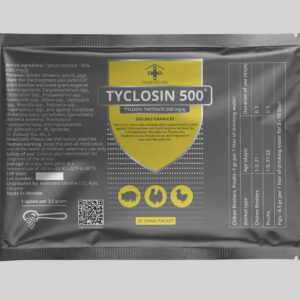
TYCLOSIN 500 mg/g Soluble Powder for dogs, chickens and pigs (100g/0.22lbs)
Tylosin (Tylan powder) 500 mg for chickens ● poultry ● pigs ● dogs
Tylosin is an antibiotic typically used to treat bacterial infections in farm animals, but veterinarians often use it to treat certain types of chronic diarrhea in cats and dogs. The powder form is not FDA approved for use in companion animals, but it is common practice for veterinarians to prescribe this medication. The drug is also given as an injectable type.
It is prescribed for the prevention and treatment of respiratory mycoplasmosis of birds, infectious sinusitis of turkeys, as well as the treatment of dysentery and gastroenterocolitis of bacterial etiology of pigs, bronchopneumonia of calves caused by pathogens sensitive to tylosin. To combat necrobacteriosis in cattle and small ruminants.

-14% Enrofloxacin

-23% DoxycyclineTylosinVitamin B1Vitamin B12Vitamin B6Vitamin B9Vitamin D3Vitamin K3Vitamin АVitamin ЕVitamins B
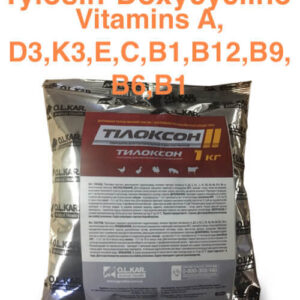
Tiloxon For Broiler chickens, Poultry, Cattle (1000g)
Doxycycline hydrochloride, tylosin tartrate, vitamins
For the treatment of mixed infections in young cattle, pigs and poultry, such as diseases of the gastrointestinal tract, respiratory tract, genitourinary system, skin, mastitis, metritis, agalactia.
The drug improves the growth and development of a young organism, reduces the likelihood of stress.
The drug is administered orally in a mixture with water or feed in the following doses:
poultry – at the rate of 1-1.5 g of preparation per 1 liter of drinking water;
young cattle – 1-1.5 g per 10 kg of body weight
pigs – 1-2 g per 10 kg of body weight.
For treatment, the drug is given twice a day for 3-5 days until the recovery or improvement of the general condition. With the preventive purpose – once a day for 3-5 days.
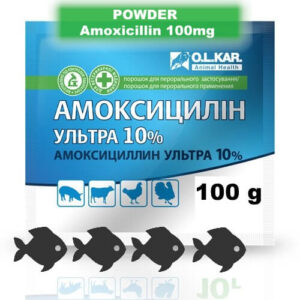
-12% Amoxicillin
Amox 10% powder useful to control of some common bacterial fish and animals 100g
Amoxicillin Ultra 10% Powder
Treatment of calves (under 3 months), pigs and poultry (chickens, broilers, replacement chicks birds) in diseases of the digestive tract, respiratory and urinary tract, skin and soft tissue caused by microorganisms sensitive to amoxicillin.
Dosage Oral doses of calves up to 3 months and pigs -1-2 g product per 10 kg of body weight per day up or 7-15 g product per 10 liters of drinking water per day up within 5-7 days; poultry (chicken, chickens, young birds repair) – 0.5 – 1 g drug per 10 kg of body weight per day up or 5-10 g product per 10 liters of drinking water per day up within 5-7 days. Renew the water with the drug should be every 24 hours.
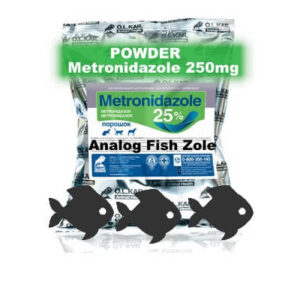
-10% MetronidazoleAntiprotozoal
Antiprotozoal Metron powder for ornamental, aquarium fish and farm animals 500g (1.1 lbs)
Metronidazole 25% Powder (Metro Zole)
Exerts a bactericidal action on gram-positive and some gram-negative bacteria. It has a good effect against a size of pathogenic bacteria associated with ornamental fish diseases. In other words, diseases including Aeromonas and pseudomonas genera and mycobacterial group (gill diseases, Rhodococcus). It is useful in the control of “Hole-in-the-Head” and “Angel Problems” in Cichlid and Discus.
Treatment of cattle, sheep, pigs, fur-bearing animals, dogs, cats and birds suffering from trichomoniasis, dysentery, diarrhea, colitis, stomatitis, as well as diseases of the respiratory system, genitourinary system, gastrointestinal tract and skin caused by microorganisms sensitive to metronidazole. Dosage Orally with food in a dose of 10-20 mg of metronidazole per 1 kg m.t. for the active substance - twice a day for 5-7 days. If necessary, treatment is repeated after 7-8 days.
-7% Tylosin
TYCLOSIN 500 powder (50g) for Broiler chickens, Poultry, Pig, Dog
Tyclosin (Tylan Tylosin powder) 50% for dogs✔ for chickens✔ for cats✔
Tylosin is an antibiotic typically used to treat bacterial infections in farm animals, but veterinarians often use it to treat certain types of chronic diarrhea in cats and dogs. The powder form is not FDA approved for use in companion animals, but it is common practice for veterinarians to prescribe this medication. The drug is also given as an injectable type.
Tylosin – the drug of a wide spectrum bacteriostatic action.
Active ingredient tylosin tartrate 500 mg is a mixture of macrolide antibiotics produced by a strain of Streptomyces fradiae, comprising mainly tylosin A.
For: Chickens, Turkeys, Swine, Honey Bees, and occasionally can be prescribed to dogs and cats
-14% Oxytetracycline


-10% Tiamulin hydrogen fumarateTylosin
TM-TL 250 ORAL Pigs, Poultry, turkeys, geese, ducks (100ml)
TIM TIL 250 (Tylosin tartrate, Tiamulin hydrogen fumarate) Arthritis; Erysipelas; Brucellosis; Dysentery; Enteritis; Campylobacteriosis; Colibacteriosis; Hoof rot; Listeriosis; Leptospirosis; Mycoplasmosis; Pasteurellosis; Peritonitis; Pneumonia; Salmonellosis; Sepsis; Chlamydia STORAGE 1 ml of the drug contains: thiamulin hydrogen fumarate