Online Pet Vet Pharmacy: Best Deals Up to 40% Off + FREE Shipping on Orders $100+

































-21% 

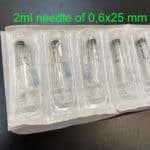
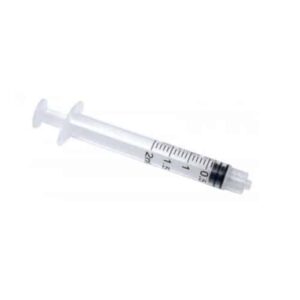
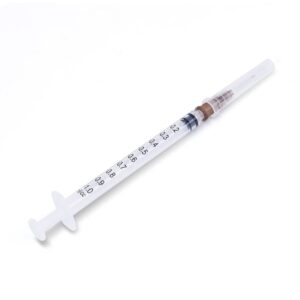
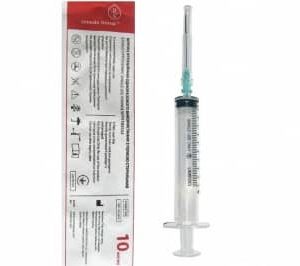
Disposable syringe 2 ml needle of 0,6х25 mm 10 pcs
Original price was: $22.98.$19.68Current price is: $19.68.
Super Panac tablets for cats 1-5 lbs ✓ 3 tab, 3 Month Supply
Original price was: $47.14.$41.56Current price is: $41.56.
Streptomycin powder for injection, 10g (1 x 10 pcs)
Original price was: $41.80.$33.00Current price is: $33.00.
| ACTIVE INGREDIENT | Streptomycin sulfate |
|---|---|
| HEALTH CONDITION | Dermatological, Wound Care |
| BRAND | Arterium |
| ANIMALS | Cattle, Goat, Horses, Pigs, Sheep |
| FORM | Powder ❙ Granules |
| SIZE | 6g (0.013lb) |
Customers Also Viewed
Original price was: $29.90.$24.20Current price is: $24.20.
Original price was: $23.09.$20.90Current price is: $20.90.
Original price was: $140.58.$108.68Current price is: $108.68.
Original price was: $249.58.$230.88Current price is: $230.88.
Original price was: $249.58.$230.88Current price is: $230.88.
Description
Streptomycin powder for injection, 10g (1 x 10 pcs)
Description
Powder is white or almost white.
Compound
1 bottle of the drug contains the active ingredient:
sterile streptomycin sulfate, in terms of streptomycin – 1.0 g.
Pharmacological properties
ATC vet classification code QJ01 – antibacterial veterinary drugs for systemic use. QJ01 GA01 – streptomycin.
Streptomycin sulfate is an aminoglycoside antibiotic that has a broad spectrum of antimicrobial (bactericidal) action. It is active against Mycobacterium tuberculosis, the majority of gram-negative (Leptospira spp., Escherichia coli, Salmonella spp., Shigella spp., Yersinia spp., Klebsiella spp. (Including Klebsiella pneumoniae), Haemophilus influenzae, Nerisseria giton Yersinia pestis, Francisella tularensis, Brucella spp.) And some gram-positive microorganisms (Staphylococcus spp., Corynebacterium diphtheriae). Less active against Streptococcus spp. (including Streptococcus pneumoniae) Enterobacter spp. Streptomycin is inactive against anaerobic bacteria, Spirochaetaceae spp., Rickettsia spp., Proteus spp., Pseudomonas aeroginosa.
With parenteral administration, the bacteriostatic concentration in the blood is created after 15-30 minutes and reaches a maximum after 1-2 hours. At a therapeutic concentration (5 μg / ml), the antibiotic is retained in the blood for 8-12 hours.
In cattle, the therapeutic concentration of streptomycin, administered intramuscularly at a dose of 3000-5000 U / kg, is retained in the blood for no more than 8 hours. The period of its stay in the blood can be increased to one day if the dose of the drug is increased threefold.
The minimum therapeutic dose for mammals is 11 μg / kg bw.
There is a direct relationship between the concentration of streptomycin in the blood, the duration of its stay and the size of the dose.
Streptomycin easily crosses the placenta and is retained for a long time in the amniotic fluid, which leads to its accumulation in the blood of the umbilical vein and amniotic fluid at half the concentration in serum.
Under normal conditions, streptomycin practically does not penetrate the blood-brain barrier. In the cerebrospinal fluid, it is detected in the amount of 2-3% of the concentration in the blood. With inflammation of the membranes of the spinal cord and brain, there is a direct relationship between the depth of the inflammatory process and the content of streptomycin in the cerebrospinal fluid. The greatest amount of streptomycin is observed in the kidneys and in smaller amounts in the lungs and heart muscle. During normal liver function, the concentration of streptomycin in its tissues is twice that in the blood. The wall of the stomach and intestines is practically impervious to streptomycin; administered orally, it is almost not absorbed, and administered parenterally does not penetrate into the cavity of the stomach and intestines. Streptomycin is absorbed very slowly from the breast.
Excreted mainly by the kidneys (95%). In the body of animals, about 30-40% of streptomycin is metabolized, and the rest is excreted unchanged in the urine by glomerular filtration at a concentration half as much as its concentration in the blood. The drug begins to be released 15-30 minutes after administration, and after 1.5-2 hours it reaches a maximum (the concentration of the antibiotic in the urine during these hours reaches 200-1000 U / ml), and ceases to be released after about 12-24 hours. Under the condition of normal functioning of the kidneys, about 2/3 of the intramuscular dose of the drug is secreted within 24 hours. The most intense secretion occurs during the first 2-4 hours after injection.
2-5% of the administered dose is excreted in the bile.
When the drug is administered orally, a certain amount of it (2-5%) is resorbed, about 2% is released unchanged, and 93-96% is destroyed.
The half-life of all aminoglycosides with normal renal function is 2-4 hours. In renal failure, the elimination half-life can increase to 70 hours.
Application
Treatment of cattle, sheep, goats, pigs and horses for diseases of the digestive tract, respiratory and genitourinary system, skin and soft tissues, which are caused by microorganisms sensitive to streptomycin.
Dosage
Intramuscularly 2 times a day with an interval of 12 hours in doses:
| Animal species | Dose (mg per 1 kg of body weight) | |
| Adult animals | Young growth | |
| Cattle | 5 | 10 |
| Sheep, goats | 10 | twenty |
| Pigs | 10 | twenty |
| Horses | 5 | 10 |
Intramuscular injections are made deep into the muscle. The course of treatment is 4-7 days.
For intramuscular administration, the drug is dissolved in water for injection, 0.9% sodium chloride solution or 0.25-0.5% novocaine solution at the rate of 4 ml of solvent per 1 g of the drug. The solution is prepared ex tempore.
Contraindications
Hypersensitivity to streptomycin. Do not use concomitantly with aminoglycoside antibiotics.
Use is contraindicated in diseases of the auditory and vestibular apparatus associated with neuritis of the VIII pair of cranial nerves, in severe forms of cardiovascular and renal failure.
Caveats
Slaughter of animals for meat is allowed 7 days after the last use of the drug. Milk consumption is allowed 2 days after the last use of the drug. The meat and milk obtained before the indicated period is disposed of or fed to unproductive animals, depending on the conclusion of a veterinary doctor.
Release form
Vials, closed with a rubber stopper for aluminum rolling in 1.0 g each.
Storage
A dry, dark place, out of the reach of children, at a temperature from 15 ºС to 25 ºС.
Shelf life is 3 years.
For use in veterinary medicine!
Delivery
We offer FREE SHIPPING WORLDWIDE for all products.
Questions & Answers
Questions and answers of the customers
Related products
-6% 
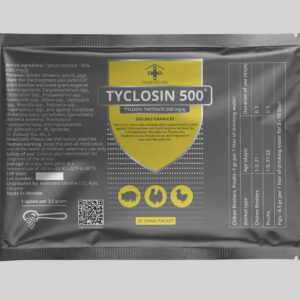
TYCLOSIN 500 mg/g Soluble Powder for dogs, chickens and pigs (100g/0.22lbs)
Tylosin (Tylan powder) 500 mg for chickens ● poultry ● pigs ● dogs
Tylosin is an antibiotic typically used to treat bacterial infections in farm animals, but veterinarians often use it to treat certain types of chronic diarrhea in cats and dogs. The powder form is not FDA approved for use in companion animals, but it is common practice for veterinarians to prescribe this medication. The drug is also given as an injectable type.
It is prescribed for the prevention and treatment of respiratory mycoplasmosis of birds, infectious sinusitis of turkeys, as well as the treatment of dysentery and gastroenterocolitis of bacterial etiology of pigs, bronchopneumonia of calves caused by pathogens sensitive to tylosin. To combat necrobacteriosis in cattle and small ruminants.

-13% Hot New 

Tyclosin 50 mg Pharmastar Sterile Solution *inj 50ml (1.7 oz)
- An antibiotic for beef cattle, non-lactating dairy cattle and swine only
- Recommended for use in calves weighing less than 200 pounds
- Administered intramuscularly for quick relief
- Treats pneumonia (shipping fever), foot rot, diphtheria and metritis in cattle
- Treats arthritis, pneumonia, erysipelas and dysentery in swine
-19% 
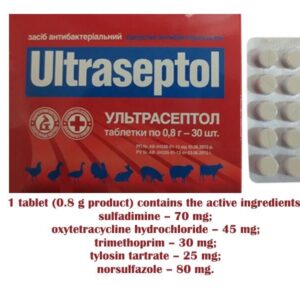
Ultrasept for Cattle, Pigs, Lambs, Rabbits, Poultry (100 tablets)
Ultrasept (sulfadimine, oxytetracycline, trimethoprim, tylosin, norsulfazole)
(Treatment of animals and poultry for diseases of the gastrointestinal tract, respiratory system and urogenital system caused by gram-positive, gram-negative and other microorganisms)
Calves under 3 months: treatment of animals suffering from gastroenteritis, salmonellosis, pasteurellosis, campylobacteriosis (vibriosis), digestive disorders with clinical signs of diarrhea caused by pathogens susceptible to the components of the preparation.
Pigs: Treatment of animals suffering from enzootic pneumonia, arthritis, dysentery, edema disease, erysipelas, salmonellosis, pasteurellosis, caused by microorganisms sensitive to components of the drug.
Lambs under 3 months: treatment of animals suffering from eymerioz, septicemia, contagious agalactia, caused by microorganisms sensitive to components of the drug.
Rabbits: the treatment of animals suffering from coccidiosis, pasteurellosis, salmonellosis, septicemia caused by pathogens susceptible to the components of the drug.
Poultry (chickens (broilers), turkeys, geese, ducks): treatment of birds suffering from coccidiosis, typhoid, cholera, salmonellosis, mycoplasmosis, rhinitis, caused by microorganisms sensitive to components of the drug.
-23%
Tiloxon For Broiler chickens, Poultry, Cattle (1000g)
Doxycycline hydrochloride, tylosin tartrate, vitamins
For the treatment of mixed infections in young cattle, pigs and poultry, such as diseases of the gastrointestinal tract, respiratory tract, genitourinary system, skin, mastitis, metritis, agalactia.
The drug improves the growth and development of a young organism, reduces the likelihood of stress.
The drug is administered orally in a mixture with water or feed in the following doses:
poultry – at the rate of 1-1.5 g of preparation per 1 liter of drinking water;
young cattle – 1-1.5 g per 10 kg of body weight
pigs – 1-2 g per 10 kg of body weight.
For treatment, the drug is given twice a day for 3-5 days until the recovery or improvement of the general condition. With the preventive purpose – once a day for 3-5 days.
-10%
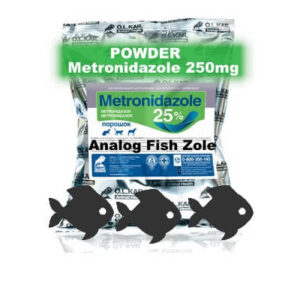
Metron powder for ornamental, aquarium fish and farm animals 500g (1.1 lbs)
Metronidazole 25% Powder (Metro Zole)
Exerts a bactericidal action on gram-positive and some gram-negative bacteria. It has a good effect against a size of pathogenic bacteria associated with ornamental fish diseases. In other words, diseases including Aeromonas and pseudomonas genera and mycobacterial group (gill diseases, Rhodococcus). It is useful in the control of “Hole-in-the-Head” and “Angel Problems” in Cichlid and Discus.
Treatment of cattle, sheep, pigs, fur-bearing animals, dogs, cats and birds suffering from trichomoniasis, dysentery, diarrhea, colitis, stomatitis, as well as diseases of the respiratory system, genitourinary system, gastrointestinal tract and skin caused by microorganisms sensitive to metronidazole. Dosage Orally with food in a dose of 10-20 mg of metronidazole per 1 kg m.t. for the active substance - twice a day for 5-7 days. If necessary, treatment is repeated after 7-8 days.
-7%
TYCLOSIN 500 powder (50g) for Broiler chickens, Poultry, Pig, Dog
Tyclosin (Tylan Tylosin powder) 50% for dogs✔ for chickens✔ for cats✔
Tylosin is an antibiotic typically used to treat bacterial infections in farm animals, but veterinarians often use it to treat certain types of chronic diarrhea in cats and dogs. The powder form is not FDA approved for use in companion animals, but it is common practice for veterinarians to prescribe this medication. The drug is also given as an injectable type.
Tylosin – the drug of a wide spectrum bacteriostatic action.
Active ingredient tylosin tartrate 500 mg is a mixture of macrolide antibiotics produced by a strain of Streptomyces fradiae, comprising mainly tylosin A.
For: Chickens, Turkeys, Swine, Honey Bees, and occasionally can be prescribed to dogs and cats
-7%

Phormasin / Tyclosin Powder for Dogs (1 KG) (Broiler chickens, Poultry, Pig)
Phormasin 50% (Tylan Tylosin powder) for dogs✔ for chickens✔ for cats✔
Tylosin (Tylan powder) 500mg for dogs✔ for chickens✔ for cats✔
Tylosin is an antibiotic typically used to treat bacterial infections in farm animals, but veterinarians often use it to treat certain types of chronic diarrhea in cats and dogs. The powder form is not FDA approved for use in companion animals, but it is common practice for veterinarians to prescribe this medication. The drug is also given as an injectable type.
For: Chickens, Turkeys, Swine, Honey Bees, and occasionally can be prescribed to dogs and cats