Online Pet Vet Pharmacy: Best Deals Up to 40% Off + FREE Shipping on Orders $100+


























-34% SulfaguanidineSulfathiazole sodiumTrimethoprimTylosin

BROVSEPTOL powder for Cattle, Goat, Pig, Poultry
Price range: $23.09 through $65.99

Solution TM-TL 250 for Pig, Broiler chickens, Poultry 100ml-1000ml
Price range: $34.42 through $173.80
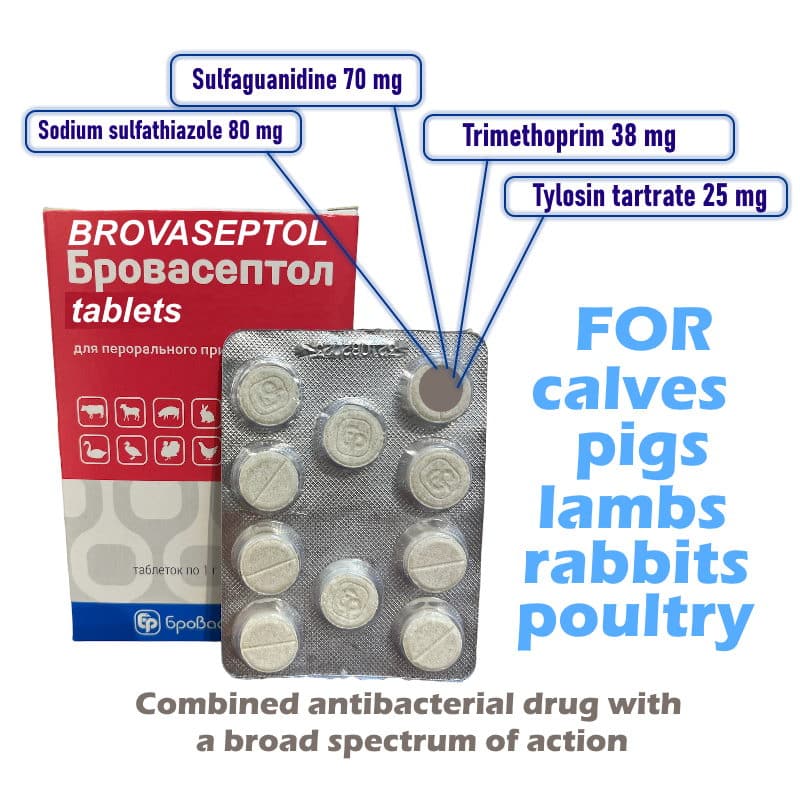
BROVSEPTOL for Calves, Lambs, Pigs, Rabbits, Poultry
Price range: $17.60 through $20.90
| ACTIVE INGREDIENT | Sulfaguanidine, Sulfathiazole sodium, Trimethoprim, Tylosin |
|---|---|
| HEALTH CONDITION | Antibiotics |
| BRAND | Brovafarma |
| ANIMALS | Broiler chickens, Cattle, Goat, Horses, Pigeons, Pigs, Poultry, Sheep |
| FORM | Tablets |
| SIZE | 100 tablets, 30 tablets |
Customers Also Viewed

Original price was: $35.67.$31.13Current price is: $31.13.
Original price was: $51.84.$43.45Current price is: $43.45.

Original price was: $29.58.$27.01Current price is: $27.01.

Original price was: $38.49.$36.18Current price is: $36.18.
Original price was: $24.12.$21.34Current price is: $21.34.
Description
BROVSEPTOL sodium sulfathiazole, sulfaguanidine, trimethoprim, tylosin tartrate
Arthritis; Dysentery; Colibacteriosis; Mycoplasmosis; Edema disease; Pasteurellosis; Pneumonia; Rhinitis; Erysipelas; Salmonellosis; Typhus; Cholera; Enteritis
Composition
1 g of the drug (1 tablet) contains:
sodium sulfathiazole – 80 mg
sulfaguanidine – 70 mg
trimethoprim lactate – 38 mg
tylosin tartrate – 25 mg
Description
Tablets are light yellow, round or oval, flat.
Pharmacological properties
Combined antibacterial drug with a broad spectrum of action.
Sulfathiazole and sulfaguanidine are antimicrobial bacteriostatic agents from the group of sulfanilamides. Sulfathiazole has a short-term effect, sulfaguanidine – a medium-term effect.
Both sulfanilamides are similar in their spectrum of properties and are active against gram-positive microorganisms – Clostridium perfringens, Bacillus anthracis, Corynebacterium diphtheriae, Actinomyces israelii, gram-negative – E. coli, Shigella spp. Toxoplasma gondii, coccidia Eimeria stiedae.
The mechanisms of antimicrobial action of sulfathiazole and sulfaguanidine are also similar and are due to antagonism with paraaminobenzoic acid (PABX) and competitive inhibition of dihydropteroate synthetase. This leads to disruption of the synthesis of tetrahydrofolic acid, necessary for the synthesis of purines and pyrimidines, inhibits the growth of Escherichia coli, reduces the synthesis of thiamine, riboflavin, nicotinic acid in the intestine.
Trimethoprim is a chemotherapeutic agent that is chemically derived from diaminopyrimidine. Acts bacteriostatically against gram-positive microorganisms – Staphylococcus spp., Streptococcus spp., Clostridium spp., Corynebacterium spp., Gram-negative microorganisms – E. coli, Salmonella spp., Klebsiella spp., Proteus sppla., Pastedella s. etc. The mechanism of action is associated with the inhibition of the enzyme dihydrofolate reductase in the synthesis of tetrahydrofolic acid. This leads to folate deficiency, the main cofactor of nucleic acid synthesis. As a result, the production of nucleic acids and bacterial protein is disrupted. Bacterial dihydrofolate reductase is approximately 50,000 to 60,000 times more strongly bound by trimethoprim than the corresponding mammalian enzyme. The effect is manifested at the stage of folate synthesis, which occurs after as sulfonamides begin to act. Concomitant use with sulfonamides enhances the inhibition of tetrahydrofolic acid production.
Tylosin tartrate is an antibiotic from the group of macrolides. Effective against gram-positive microorganisms – Corynebacterium spp., Clostridium spp., Erysipelothrix spp., Diplococcus pneumoniae, Staphylococcus aureus, some gram-negative microorganisms – Pasteurella spp., Vibrio spp., Leptospisla spp., Leptospisla spp. , rickettsiae Rickettsia spp., spirochetes Spirochaetales, mycoplasmas Mycoplasma gallisepticum, M. synoviae, M. meleagridis. Tylosin acts bacteriostatically, inhibiting protein synthesis, due to irreversible connection with the 50S subunit of bacterial ribosomes. Stops the growth and reproduction of microbial cells, inhibits RNA synthesis in the ribosomes of bacterial cells at any stage of the ribosomal cycle.
Sulfathiazole is well absorbed from the gastrointestinal tract and acts systemically. Sulfaguanidine is almost not absorbed, due to which there is a high concentration in the intestine and the maximum effect is achieved in the treatment of gastrointestinal diseases. Sulfanilamides penetrate well into tissues and body fluids, including pleural effusion, peritoneal and synovial fluid, middle ear exudate, ventricular moisture, urogenital tract tissue, pass through the placenta and into milk. Metabolized in the liver, mainly by acetylation, with the formation of microbiologically inactive but toxic metabolites. Excreted by the kidneys about half unchanged (with an alkaline reaction of urine excretion increases), a small amount is excreted in the bile. In renal failure, the accumulation of sulfonamides and their metabolites in the body is possible,
When taken orally, tylosin is rapidly absorbed from the gastrointestinal tract and within an hour there is a sufficient bacteriostatic level in the blood and tissues. Therapeutic concentrations of the drug are stored in serum for 6-8 hours. It is metabolized mainly in the liver and excreted unchanged mainly in the urine and partly in the feces, in laying birds – with eggs, in lactating animals – with milk.
Absorption of trimethoprim from the gastrointestinal tract occurs rapidly and almost completely (90-100%), binding to plasma proteins – up to 70%. High concentrations of trimethoprim are observed in the secretion of bronchial glands, prostate and bile. It crosses the placental barrier and enters the milk. The half-life in plasma is 8-10 hours. The kidneys excrete 50-60% within 24 hours mainly by glomerular filtration and tubular secretion, with 80-90% – unchanged, the rest – in the form of inactive metabolites, a small amount (4%) – with bile.
Indication
Treatment of animals and poultry for diseases of the gastrointestinal tract, respiratory system and genitourinary system caused by microorganisms sensitive to the active substances of the drug:
- calves under 3 months – gastroenteritis, salmonellosis, pasteurellosis, vibriosis;
- pigs – enzootic pneumonia, arthritis, dysentery, edema, erysipelas, salmonellosis, pasteurellosis;
- lambs under 3 months of age – septicemia, eimeriosis;
- rabbits – gastroenteritis, colibacillosis, pasteurellosis, coccidiosis, pneumonia;
- poultry (broiler chickens, turkeys, ducks, geese) – typhus, cholera, salmonellosis, mycoplasmosis, rhinitis.
Contraindication
Do not use in animals with hypersensitivity to the active substances of the drug, impaired liver and kidney function, lactating and pregnant females.
Do not use in ruminants with functionally developed pancreas, laying hens, whose eggs are eaten by humans.
Do not use simultaneously with penicillins, cephalosporins, lincomycin, paraaminobenzoic acid and its compounds.
Method of application and dosage
The tablets are administered orally with feed, pre-grinding. The daily dose for all species of animals is 1.5-2 g or 1.5-2 tablets (111-148 mg of sulfathiazole, 105-140 mg of sulfaguanidine, 44-58 mg of trimethoprim, 32-43 mg of tylosin) per 10 kg of body weight body, it is given in two doses, the course – 4-5 days (until the complete disappearance of symptoms). Treatment can be extended for 1-2 days. At the first application, depending on the condition of the animal, the dose can be increased by 30-100%.
*Kilograms to a Pounds conversion table
| Kilograms (kg) | Pounds (lb) | Pounds+Ounces (lb+oz) |
| 0.1 kg | 0.220 lb | 0 lb 3.527 oz |
| 1 kg | 2.205 lb | 2 lb 3.274 oz |
| 5 kg | 11.023 lb | 11 lb 0.370 oz |
| 10 kg | 22.046 lb | 22 lb 0.740 oz |
Reservation
With long-term use of the drug may develop allergic reactions (skin rash, urticaria, pruritus), hepatitis, crystalluria, blood pathologies (leukopenia, agranulocytosis, thrombocytopenia).
In ruminants, the drug can inhibit the growth and reproduction of the symbiotic microflora of the rumen, which is involved in the synthesis of vitamins. Therefore, it is advisable to use B vitamins at the same time, not to limit the animals in the water and to feed foods rich in proteins and vitamins.
Some drugs, such as salicylates and phenylbutazone, may interfere with the binding of sulfonamides to plasma proteins and thereby increase the toxicity of sulfonamides. Paraaminobenzoic acid derivatives, such as novocaine, tetracaine and procainamide hydrochloride, reduce the antimicrobial activity of sulfonamides.
Do not use with antibiotics that are antagonists of the components of the drug (chloramphenicol, monomycin, ceporin, ristomycin, kanamycin).
After the last application of the drug slaughter of animals and poultry for meat is allowed in 8 days. Meat obtained before this date is disposed of or fed to non-productive animals, depending on the conclusion of the veterinarian.
Storage conditions
In a dry, dark place, out of reach of children at a temperature of +4 to +25 ° C.
Expiration date
2 years.
Reviews (0)
You must be logged in to post a review.
Delivery
We offer FREE SHIPPING WORLDWIDE for all products.
Questions & Answers
Questions and answers of the customers
You may also like…
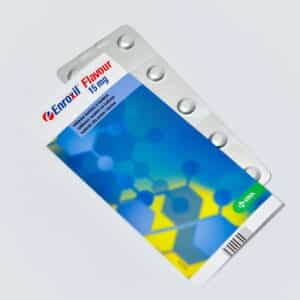
-9% New Enrofloxacin
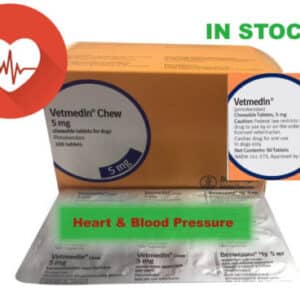
-19% PimobendanHeart & Blood Pressure
❤️Chewable Tablets for Dogs 5 mg 100 tablets
Vetmedin (Pimobendan)
Vetmedin (pimobendan) is indicated for the management of the signs of mild, moderate, or severe (modified NYHA Class II, III, or IV) congestive heart failure in dogs due to atrioventricular valvular insufficiency (AVVI) or dilated cardiomyopathy (DCM). Vetmedin is indicated for use with concurrent therapy for congestive heart failure (e.g., furosemide, etc.) as appropriate on a case-by-case basis.
Key Benefits
- Helps dogs suffering from congestive heart disease
- Shown to increase quality and length of life in dogs
- Increases the ability of the heart to pump blood
- Comes in delicious beef-flavored chewable tablets

OclacitinibAllergyDermatological
20 tablets
100 tablets
Apoq 3.6 mg Tabs
Apoquel (oclacitinib)
Apoquel (oclacitinib) is an FDA-Approved medication that provides fast-acting relief from its symptoms and treats acute and chronic pruritus in dogs. Apoquel is specifically formulated to relieve itchiness associated with skin allergies. It can also be taken in conjunction with other medications meant to treat your dog’s seasonal allergies as directed by your veterinarian.
Apoquel starts working within 4 hours of administering the first dose and controls itching within 24 hours. To ensure that it’s easy to administer the proper dosage to your dog, this treatment comes in three different dosages. Each dosage is sold per tablet, in 20 count, or 100 count bottles.
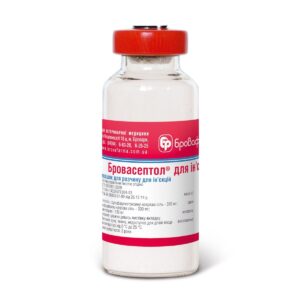
-15% Sulfadiazine sodiumSulfadimidine sodiumTrimethoprim
Related products
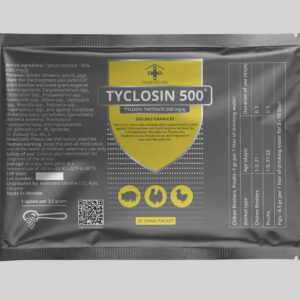
-6% Tylosin
TYCLOSIN 500 mg/g Soluble Powder for dogs, chickens and pigs (100g/0.22lbs)
Tylosin (Tylan powder) 500 mg for chickens ● poultry ● pigs ● dogs
Tylosin is an antibiotic typically used to treat bacterial infections in farm animals, but veterinarians often use it to treat certain types of chronic diarrhea in cats and dogs. The powder form is not FDA approved for use in companion animals, but it is common practice for veterinarians to prescribe this medication. The drug is also given as an injectable type.
It is prescribed for the prevention and treatment of respiratory mycoplasmosis of birds, infectious sinusitis of turkeys, as well as the treatment of dysentery and gastroenterocolitis of bacterial etiology of pigs, bronchopneumonia of calves caused by pathogens sensitive to tylosin. To combat necrobacteriosis in cattle and small ruminants.
-13% Tylosin
TYCLOSIN 500 mg/g Soluble Powder for poultry, chickens, pigs and dogs 25g
Tylosin (Tylan powder) 500mg for chickens ● poultry ● pigs ● dogs
Tylosin is an antibiotic typically used to treat bacterial infections in farm animals, but veterinarians often use it to treat certain types of chronic diarrhea in cats and dogs. The powder form is not FDA approved for use in companion animals, but it is common practice for veterinarians to prescribe this medication. The drug is also given as an injectable type.
It is prescribed for the prevention and treatment of respiratory mycoplasmosis of birds, infectious sinusitis of turkeys, as well as the treatment of dysentery and gastroenterocolitis of bacterial etiology of pigs, bronchopneumonia of calves caused by pathogens sensitive to tylosin. To combat necrobacteriosis in cattle and small ruminants.
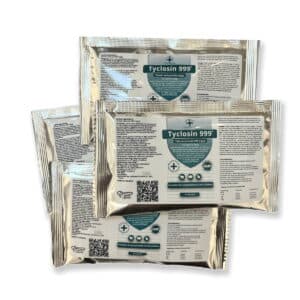
-34% Sold out Tylosin
Tyclosin 999 Pure powder for Dogs 100 g
Tyclosin 999 (Tylosin, Tylan) for dogs✔ for chickens✔ for cats✔
Tylosin is an antibiotic typically used to treat bacterial infections in farm animals, but veterinarians often use it to treat certain types of chronic diarrhea in cats and dogs. The powder form is not FDA approved for use in companion animals, but it is common practice for veterinarians to prescribe this medication. The drug is also given as an injectable type.
Tylosin – the drug of a wide spectrum bacteriostatic action.
Active ingredient tylosin tartrate is a mixture of macrolide antibiotics produced by a strain of Streptomyces fradiae, comprising mainly tylosin A.
For: Chickens, Turkeys, Swine, Honey Bees, and occasionally can be prescribed to dogs and cats
-6% Tylosin
TYCLOSIN 500 mg/g Soluble Powder for dogs, chickens and pigs (100g/0.22lbs)
Tylosin (Tylan powder) 500 mg for chickens ● poultry ● pigs ● dogs
Tylosin is an antibiotic typically used to treat bacterial infections in farm animals, but veterinarians often use it to treat certain types of chronic diarrhea in cats and dogs. The powder form is not FDA approved for use in companion animals, but it is common practice for veterinarians to prescribe this medication. The drug is also given as an injectable type.
It is prescribed for the prevention and treatment of respiratory mycoplasmosis of birds, infectious sinusitis of turkeys, as well as the treatment of dysentery and gastroenterocolitis of bacterial etiology of pigs, bronchopneumonia of calves caused by pathogens sensitive to tylosin. To combat necrobacteriosis in cattle and small ruminants.
-16% NorsulfazoleOxytetracyclineSulfadimidineTrimethoprimTylosin
Ultrasept powder for Cattle, Pigs, Sheeps, Poultry 500 g
Ultrasept powder (sulfadimine, oxytetracycline, trimethoprim, tylosin, norsulfazole)
For the prevention and treatment of animals and poultry with primary and secondary bacterial infections of the respiratory, digestive and urinary tracts that is: the upper respiratory tract catarrh, pneumonia, enteritis, cystitis, mastitis, septicemia, postnatal complications, and a size of specific infections:
– Calves – Salmonella gastroenteritis kolibatselyarny, pasteurellosis, vibriosis;
– Pigs – enzootic pneumonia, arthritis, dysentery, edematous disease erysipelas, salmonellosis, pasteurellosis;
– Sheep – septicemia, eymerioz, contagious agalactia;
– Poultry – typhoid, cholera, salmonellosis, mycoplasmosis, rhinitis.
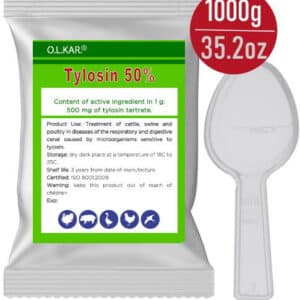
-7% Tylosin

Phormasin / Tyclosin Powder for Dogs (1 KG) (Broiler chickens, Poultry, Pig)
Phormasin 50% (Tylan Tylosin powder) for dogs✔ for chickens✔ for cats✔
Tylosin (Tylan powder) 500mg for dogs✔ for chickens✔ for cats✔
Tylosin is an antibiotic typically used to treat bacterial infections in farm animals, but veterinarians often use it to treat certain types of chronic diarrhea in cats and dogs. The powder form is not FDA approved for use in companion animals, but it is common practice for veterinarians to prescribe this medication. The drug is also given as an injectable type.
For: Chickens, Turkeys, Swine, Honey Bees, and occasionally can be prescribed to dogs and cats

-5% Tylosin
TYCLOSIN 500mg / 50% powder for poultry, chickens and pigs (500g)
Tylosin (Tylan powder) 500mg for dogs✔ for chickens✔ for cats✔
Tylosin is an antibiotic typically used to treat bacterial infections in farm animals, but veterinarians often use it to treat certain types of chronic diarrhea in cats and dogs. The powder form is not FDA approved for use in companion animals, but it is common practice for veterinarians to prescribe this medication. The drug is also given as an injectable type.
Tylosin – the drug of a wide spectrum bacteriostatic action.
Active ingredient tylosin tartrate 500 mg is a mixture of macrolide antibiotics produced by a strain of Streptomyces fradiae, comprising mainly tylosin A.
For: Chickens, Turkeys, Swine, Honey Bees, and occasionally can be prescribed to dogs and cats

-10% Tiamulin hydrogen fumarateTylosin
SOLUTION TMTL for Cattle, Goat, Pig, Sheep (100ml) *inj
TIM TIL SOLUTION for injection (Tylosin tartrate, Tiamulin hydrogen fumarate) Arthritis; Erysipelas; Brucellosis; Dysentery; Enteritis; Campylobacteriosis; Colibacteriosis; Listeriosis; Leptospirosis; Mycoplasmosis; Pasteurellosis; Peritonitis; Pneumonia; Salmonellosis; Sepsis; Chlamydia STORAGE 1 ml of the drug contains: thiamulin hydrogen
Reviews
There are no reviews yet.